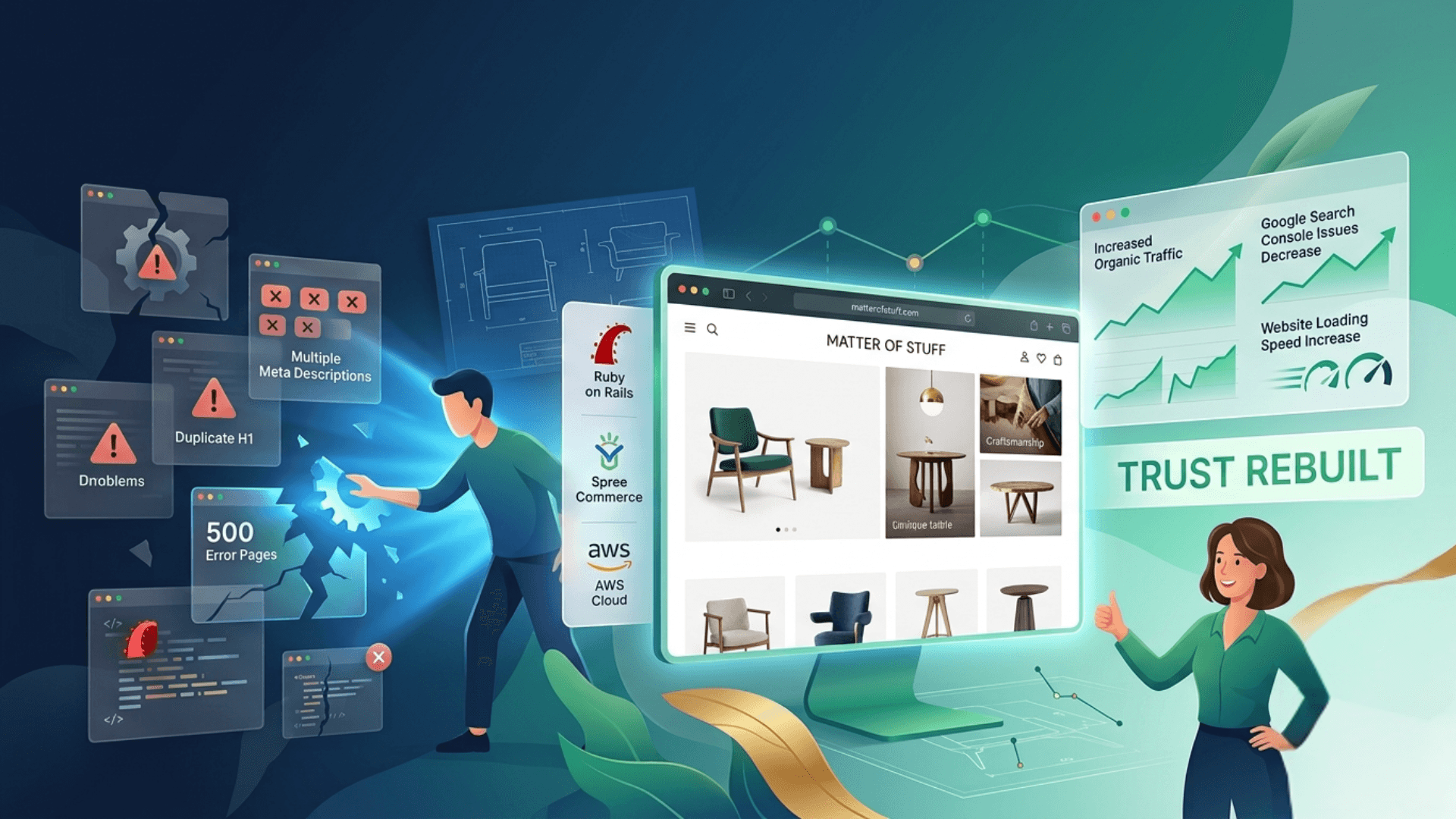
Our technical team had a few initial meetings with the client to understand the issues they were facing and their objectives. After carefully analysing the information they provided, the team proceeded to the next step to review and validate the queries with the live website. This step was to understand and decide the level of access we would need in order to continue further investigations, plus apply necessary fixes.
The team then clearly communicated the right access they needed to proceed with the task, and they could manage to work professionally with the on-duty technical team. Communication and flexibility were the keys for us to work collaboratively and efficiently with the remote technical team.
While the team worked on reaching this stage, a full-stack developer was assigned to prepare for the technology. That was as per our initial plan to accomplish this task.
Our industry experience and deep understanding of these kinds of technical issues helped us to uncover the depth of these particular issues. A root cause analysis was used to understand and then decide necessary short-term and long-term fixes.
Original issues and the issues we identified by the team were put into the same list, and then they were prioritised based on criticality, plus the original list. Our fixes were mainly oriented towards fixing the root causes of the application rather than tweaking the patches to the code.
It took only two weeks for us to complete the task and deploy them for UAT. All fixes could be deployed to production within three weeks (From the initial client meeting to live release). The team was able to build a positive impression on website development and a green light for this client’s digital marketing strategy.