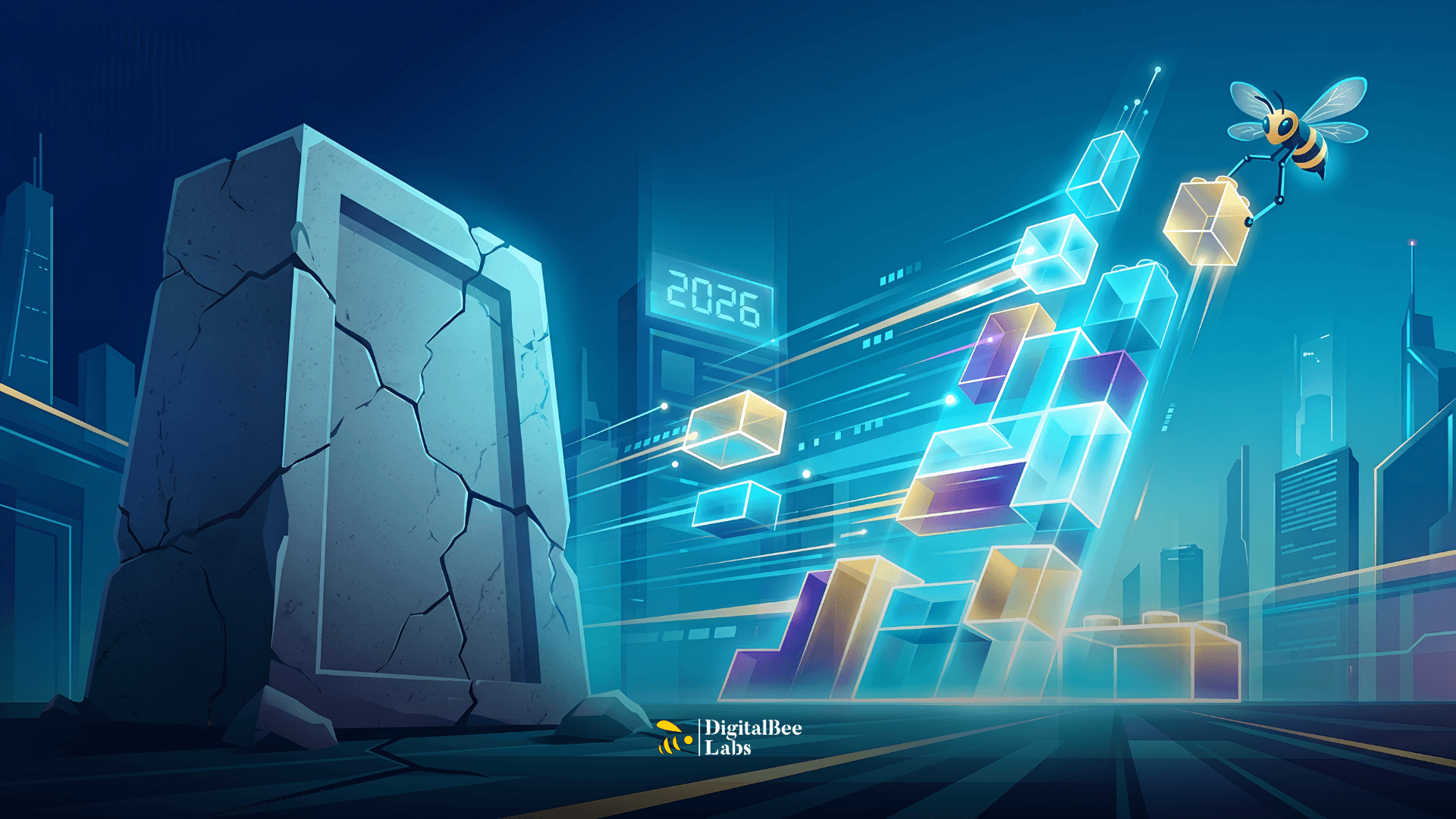
The Death of the 'One-Size-Fits-All' Platform
For years, the standard approach was to build within the ecosystem of a single provider. It was easy, but it created a dangerous dependency. Today, these platforms often struggle to provide the sub-second performance and multi-channel flexibility that modern users (and AI search engines) demand.
The transition we are seeing and leading is toward Composable Architecture.
What is Composable Architecture?
Think of your digital product not as a single, solid block, but as a collection of high-performance 'Lego' bricks. Each piece, from your checkout engine and inventory management to your customer data platform, is independent. They communicate through high-speed APIs, allowing you to swap, upgrade, or scale any single part of your business without risking the stability of the whole.
Why 'Modular' Wins Across Web & Mobile
In 2026, the user journey is rarely linear. A customer might discover a product via an AI assistant on their phone, research it on a desktop web app, and ultimately purchase it through a social commerce integration.
A modular architecture ensures:
- Unified Logic, Diverse Frontends: You write your core business rules once and deploy them everywhere: web, iOS, Android, and beyond.
- Performance Parity: Whether a user is on a 5G mobile connection or high-speed fibre, your architecture delivers consistent, lightning-fast responses.
- Risk Isolation: A spike in mobile traffic shouldn’t crash your desktop checkout. In a modular system, resources are allocated where they are needed most.
Engineering for the 'Agentic' Future
The most significant shift in 2026 is the rise of AI Agents. These aren't just chatbots; they are autonomous entities that find, compare, and buy products for users.
If your data is locked inside a legacy system, these agents can't 'see' you. By adopting an API-first, structured architecture, you make your business discoverable to the AI economy. You aren't just building for humans anymore; you’re building for the entire digital ecosystem.
Moving Toward a Growth-First Foundation
At DigitalBee Labs, our 'Stability First' philosophy is designed for this exact moment. We help brands move away from the 'Sunk Cost' of rigid legacy systems and transition toward flexible, resilient architectures that can handle whatever comes next.
Whether you are looking to rescue a struggling SaaS platform or architect a new E-commerce powerhouse, the goal is the same: High Velocity, Low Risk.
Elevate Your Infrastructure
Is your current architecture an engine for growth or a bottleneck? Let’s evaluate your stack and build a roadmap that aligns your technology with your ambition.