
1. Velocity Collapse
The most obvious sign of failure is when progress effectively stops. You might be 14 months into what was supposed to be an 8-month project. New features that should take days now take weeks because the team is drowning in technical debt.
2. The 'Regression Trap'
Does fixing one bug on Monday break two existing features on Wednesday? This is a symptom of zero automated testing coverage. When developers spend 60% of their time debugging regressions rather than building value, the architecture is fundamentally broken.
3. The 'Ghosting' Developer
Communication has shifted from proactive daily updates to vague, weekly promises. If your offshore team is becoming difficult to reach or doesn't seem to understand your requirements anymore, you have a critical communication gap that leads to project derailment.
4. Disappearing Documentation
No one knows how the deployment pipeline works except one person who is no longer responding. When technical knowledge is siloed in a single head rather than a codebase, your business continuity is at extreme risk.
5. Infinite Scope Creep
Are requirements being frequently redefined without a clear roadmap? Without a product owner or a decision-maker actively involved, the project becomes an unprioritized mess of 'nice-to-have' features that never reach the finish line.
6. High Team Turnover
Developers are leaving the project at an alarming rate. Low morale and a revolving door of engineers mean no one truly understands the system’s logic, leading to 'amateur' code quality and structural inconsistencies.
7. Stakeholder Confidence Breakdown
Are you requesting progress reports more frequently? Are end-users complaining that the software doesn't solve their actual problems? When executives lose confidence in delivery, the project is often closer to cancellation than completion.
8. Security and Compliance Gaps
Is your legacy stack unable to support modern security protocols? In highly regulated European sectors, a project that fails to meet GDPR or ISO standards isn't just a technical failure; it’s a legal liability.
9. Interoperability Hurdles
Your software is a silo. It cannot integrate with your ERP, CRM, or third-party APIs without significant, costly rework. A project that cannot talk to the rest of your business is a bottleneck, not an asset.
10. The Developers Suggest a 'Full Rebuild'
When your own engineering team openly admits, 'We need to scrap this and start over,' the project has hit its tipping point. While a full rewrite is expensive, sometimes the cost of 'doing nothing' and struggling with failing code is even higher.
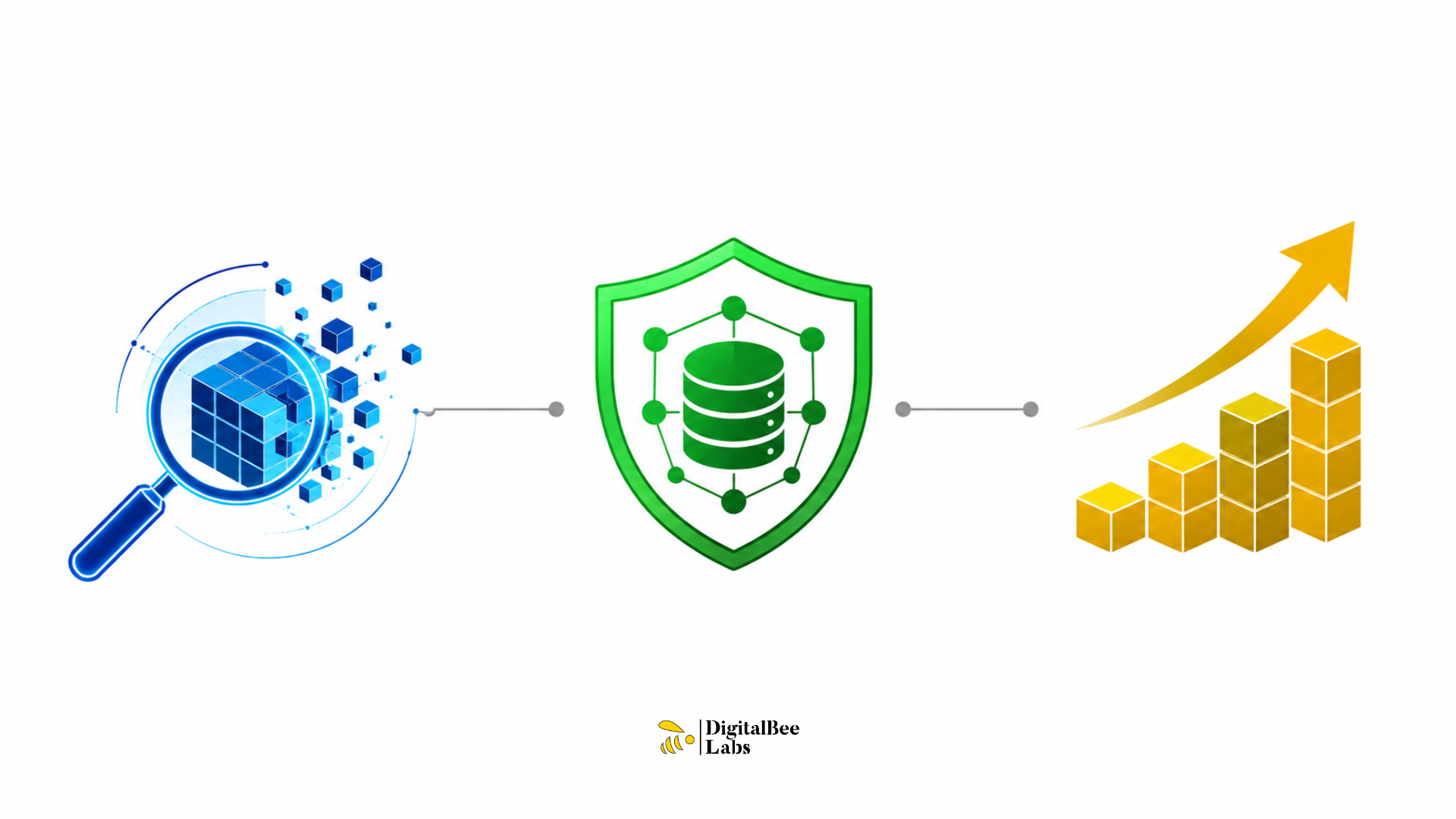
The Decision: Salvage vs. Scrap
One of the hardest questions for a business leader is: Can this be saved? At Digitalbee Labs, we believe in radical honesty.
- Rescue it if the core business logic is sound, but the implementation is messy. Most projects contain salvageable elements that preserve your initial investment.
- Scrap it if the tech stack is entirely obsolete or the technical debt is so high that refactoring costs more than a clean-slate rebuild.
The Digitalbee Labs Stabilisation Path
We don't believe in 'quick fixes' that add more debt. Our rescue process is surgical:
- Technical Audit (48 Hours): A deep-dive investigation into your architecture, security, and code quality to find the 'bleeding'.
- Stabilisation: We patch critical vulnerabilities and secure your Intellectual Property (IP) rights immediately, ensuring you own 100% of your code.
- Refactoring for Scale: We clean the code mess using AI-accelerated workflows to ensure the project is ready for growth without a total rewrite.
Why the UK/Europe Chooses Digitalbee Labs
Operating from our Sri Lankan engineering hub, we provide what traditional offshore models lack: Synchronous Overlap. Our team provides 3.5 hours of daily overlap with the UK morning, ensuring real-time daily standups and 'nearshore' collaboration at 'offshore' efficiency.